
The handbook
Seven chapters about caps and hats
Each chapter covers one part of choosing, understanding and looking after a hat. They are written to be read in order, but each one stands alone. Facts are tied to named sources; practical tips without a source are marked as general practice.
-

Chapter 01
Hat sizing and fit: measuring your head and reading a size
How to measure your head, how hat sizes are usually expressed, how fitted and adjustable caps differ, and how to judge fit in the mirror.
-

Chapter 02
Cap and hat styles, and the names of their parts
The parts every cap and hat shares, from crown to sweatband, and a field guide to common styles: baseball caps, beanies, bucket hats, flat caps, fedoras and straw hats.
-

Chapter 03
Hat materials and fibres: what your lid is made of
Cotton twill, denim, wool, felt, polyester and straw: how each behaves with water, heat and wear, and how to find out what a hat is made of.
-
Chapter 04
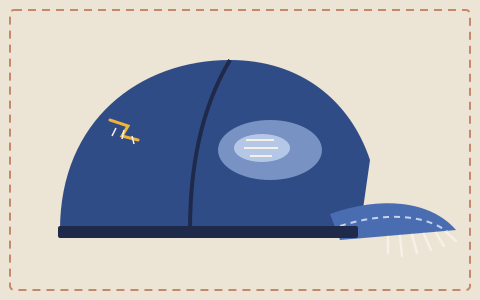
Distressed finishes: how ripped and worn-in caps are made
What a distressed finish is, the main ways fraying, fading and abrasion are produced, why some methods are contested, and how to keep a ripped cap from falling apart.
-

Chapter 05
Care labels and symbols: reading the tag inside a hat
What US care-label rules require, why many hats carry no care label at all, how the five basic care symbols work, and what to do when there is no tag.
-

Chapter 06
Cleaning caps and hats without ruining their shape
A cautious, step-by-step approach to cleaning caps and hats: testing first, spot cleaning, hand washing, sweatbands, felt and straw, and drying in shape.
-
Chapter 07
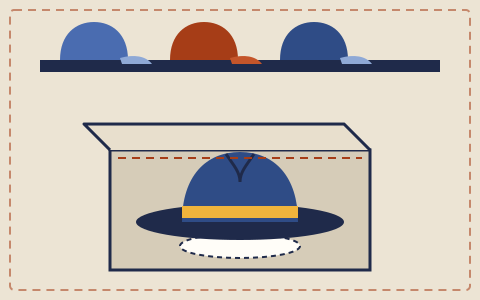
Storing hats: shape, light, damp and moths
How to store caps and hats so they keep their shape and colour: support for crowns and brims, light, humidity and mould, and keeping clothes moths away from wool and felt.