
Finding out what a hat is made of
Before you clean, stretch, steam or store a hat, it helps to know its fibre, because each fibre reacts differently to water, heat and rubbing. The first place to look is the label. The US Federal Trade Commission's guide to the Textile and Wool Acts explains that covered textile products sold in the United States must carry a label naming each fibre by its generic name, such as cotton, wool or polyester, listed in order of how much of each there is by weight, along with the country of origin and the identity of the maker or seller. Rules in other countries differ in detail, but fibre-content labels are common worldwide.
Hats can be harder to read than shirts. The label may be small, printed on the sweatband, or missing. A cap can also use several materials at once: a cotton crown, a polyester mesh back, a plastic peak insert and a foam front. The fibre label usually describes the main fabric, not every part.
If there is no label, the descriptions below can help you make an educated guess. When in doubt, treat the hat as the most delicate material it might be.
Cotton twill and canvas
Cotton is the most common fabric for caps. Encyclopaedia Britannica describes cotton as a seed fibre made mostly of cellulose. In practical terms, that means cotton absorbs water readily, feels comfortable against skin, takes dye well and tolerates washing, but it can shrink and crease.
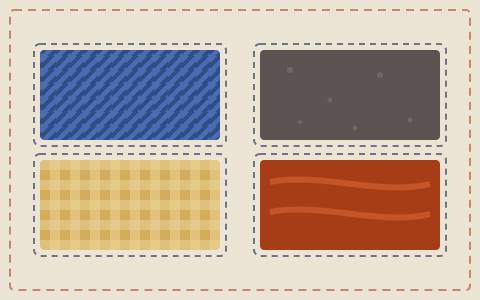
Most cotton caps are made from twill, a weave that produces diagonal ribs on the surface, or from canvas, a heavier plain weave. Twill is soft and drapes well; canvas is stiffer and holds shape. Both fray at a cut edge, which makes cotton a natural choice for distressed finishes. Brushed cotton has had its surface raised for softness, and "washed" or "garment-dyed" cotton has been washed or dyed after sewing so that it looks and feels broken in from the start.
What this means for care: cotton is the most forgiving cap fabric, but the dye and the shape are the weak points, not the fibre. Strong colours can bleed, and the stiffeners inside a structured cap may not survive soaking.
Denim
Denim is a sturdy cotton twill. Britannica's entry explains that it is traditionally woven with a dyed warp yarn, classically indigo blue, and an undyed or white weft. That construction is the reason denim fades the way it does: the coloured threads sit mostly on the surface, so wear and washing rub colour away and reveal paler threads beneath. It also explains why a frayed denim edge shows a fringe of white threads: those are the weft yarns, freed when the coloured warp threads break.
Indigo-dyed denim can transfer colour to pale fabric, skin and hair, especially when new or damp. That is normal behaviour for the dye, not a fault in the hat, but it is worth knowing before you wear a new dark denim cap in the rain.
Wool and knits
Wool is an animal fibre. Britannica notes that wool fibres are covered in tiny overlapping scales and naturally crimped, which makes wool springy, warm and good at holding air. Wool can also absorb a considerable amount of moisture before it feels wet, which is why a wool hat stays comfortable in damp weather.
The same scales are wool's main care risk. When wool is wet, warm and agitated, the scales catch on each other and the fibres lock together, shrinking and thickening the fabric. That process is useful when it is controlled, because it is how felt is made, but disastrous when it happens to a knitted beanie in a hot wash. Woollen caps and beanies are usually best treated as hand-wash or cool, gentle items unless their label clearly says otherwise.
Many knitted hats are blends of wool with acrylic or nylon, or are entirely acrylic. Blends are usually less prone to felting than pure wool, but the label is the only reliable guide.
Felt
Felt is not woven or knitted. Britannica describes it as a fabric made by matting fibres together using moisture, heat and pressure, and notes that wool and certain animal furs felt especially well. Felt has been used for hats for centuries because it can be formed into a seamless crown and brim, then shaped with steam on a wooden block.
Felt's behaviour follows from how it is made:
- It sheds light rain, because the dense, matted surface resists water for a while.
- It can shrink or warp if soaked, because the felting process can continue or the blocked shape can relax.
- It can be reshaped with gentle steam, which is how a crease or brim snap is restored.
- It attracts dust and lint, and its surface can be marked by greasy fingers.
- It is food for clothes moth larvae, as chapter 07 explains.
Felt hats should generally not be put in water. Chapter 06 describes the dry methods most commonly used instead.
Polyester, nylon and acrylic
Synthetic fibres are made from polymers rather than grown. Britannica's entry on polyester describes it as strong, resistant to stretching and shrinking, quick to dry and resistant to wrinkling, which is why it is common in sports caps, mesh backs and performance fabrics. Nylon shares many of those traits and is used for lightweight, packable hats. Acrylic is common in knitted beanies as a wool substitute.
The main weakness of synthetic fibres is heat. Polyester and nylon soften and can melt at temperatures a cotton cap would survive, so hot irons, hot dryers and leaving a cap on a car dashboard in strong sun are all risks. Synthetic fabrics can also hold on to body odour more than natural fibres, which is a practical reason they need regular cleaning.
Straw
"Straw" covers many plant materials: cereal straw, paper straw, palm leaf, raffia and others, plaited into a braid that is sewn in a spiral, or woven directly into the shape of a hat. UNESCO's description of the traditional toquilla straw hat of Ecuador shows the most refined end of the scale: fibre from the toquilla plant is processed and dried, then woven by hand into a hat, a craft inscribed on UNESCO's Representative List of the Intangible Cultural Heritage of Humanity.
Natural straw is dry and fairly brittle. Bending it repeatedly in the same place, such as pinching the crown to lift the hat, eventually cracks it. Too much water can make it go limp and lose shape; too little humidity can make it more brittle. Many straw hats are finished with a sizing or stiffener that water can wash out. In general, straw hats are cleaned dry or with the lightest possible dampness, never soaked.
Worked example
An imaginary reader finds an unlabelled grey cap in a drawer. The crown is a smooth, slightly fuzzy fabric with no visible weave, and the brim is stiff. With no label, they treat it as possible wool felt: no water, a soft brush only, and stored away from moths, rather than risk shrinking it by assuming cotton.
The parts you cannot see
A hat's hidden materials often decide how it can be cleaned more than its outer fabric does:
- Peak inserts. Modern peaks are usually plastic, which tolerates water. Older or inexpensive caps sometimes use cardboard, which softens and warps when wet. If you tap the peak and it sounds and feels like card, or the cap is older, assume water will damage it.
- Front stiffeners. The buckram or fused backing behind the front panels can soften, crease or bubble when soaked.
- Foam fronts. Common on mesh-back caps; foam can crumble with age and does not like heat.
- Leather sweatbands. Leather can stiffen, crack or stain when soaked and dried quickly.
- Glues. Some brims, labels and patches are glued, and heat or long soaking can release them.
Knowing these weak points is the reason the cleaning chapter starts with a test and a spot clean rather than a full wash.
Next chapter: Distressed finishes: how ripped and worn-in caps are made